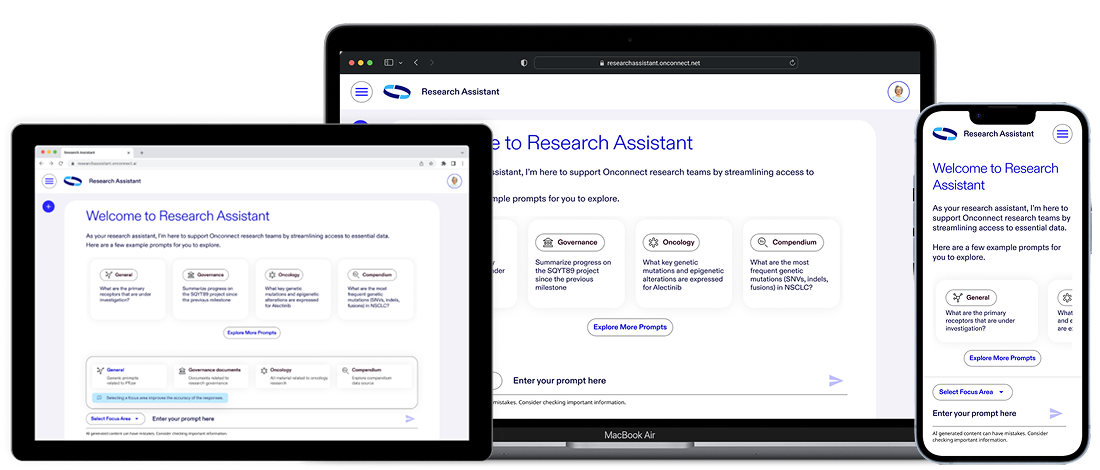
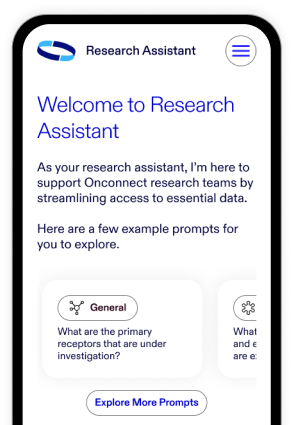
Pfizer's oncology R&D scientists were drowning in biomedical data. I designed an AI interface that turns complex research queries into instant, visualised insights — fundamentally changing how drug discovery is conducted.
Pfizer's oncology researchers were drowning in data they couldn't query intelligently. Cross-referencing 15+ databases manually, spending 40% of their time on retrieval rather than analysis, and waiting days for insights that should take minutes. The opportunity was clear: eliminate the gap between question and discovery.
Project Goal
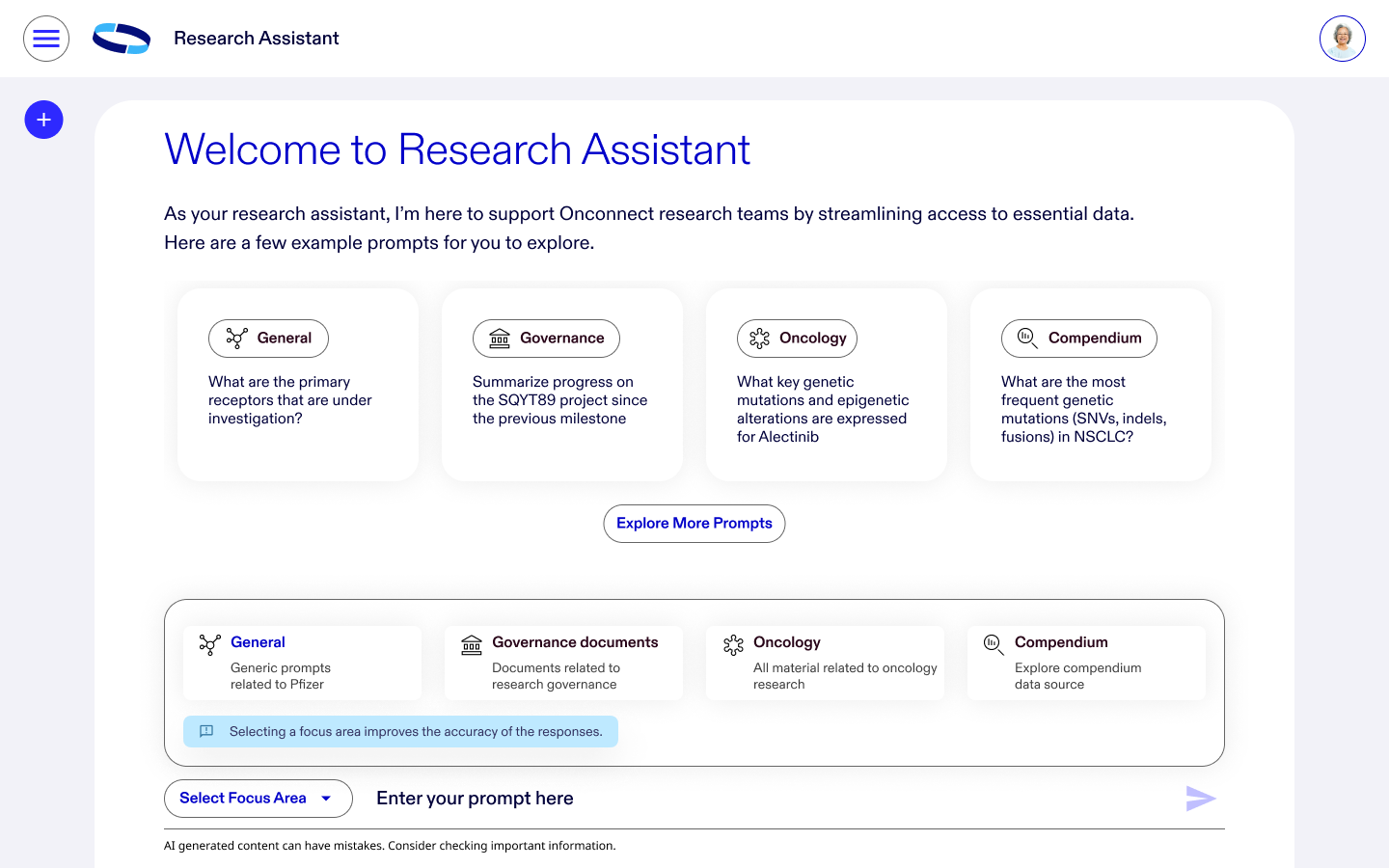
Design an AI assistant interface that lets researchers ask complex questions in natural language and receive structured, visualised insights — dramatically compressing the time from question to discovery.
The core interaction model: researchers type a question in plain English. The AI parses intent, queries the relevant datasets, and returns a visualised insight panel — with source citations, confidence indicators, and suggested follow-up queries.
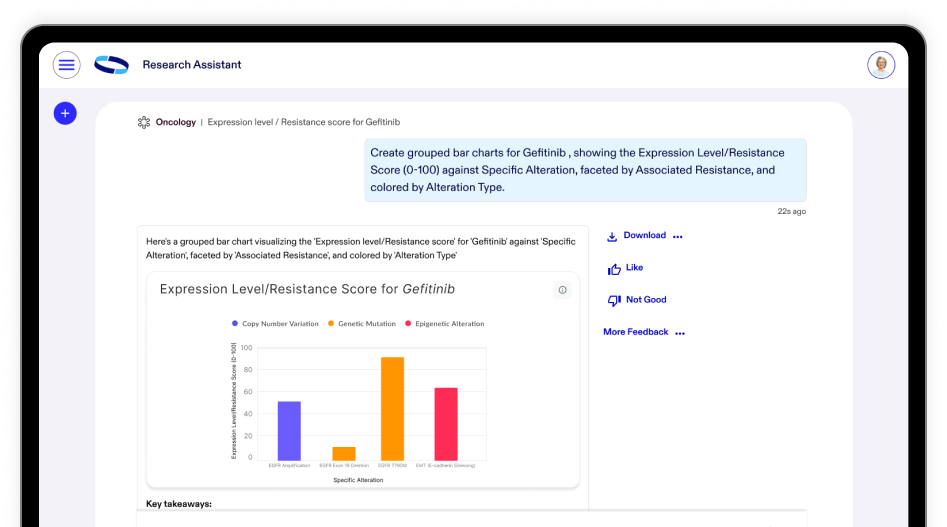
AI transparency was not a nice-to-have for expert users — it was the product. Every AI response shows its sources, confidence levels, and the datasets it queried. Without interpretable reasoning, the tool would have been rejected regardless of its accuracy.
"I don't want to learn a new query language. I want to ask the data a question the way I'd ask a colleague."
— Senior Research Scientist, Pfizer Oncology
I conducted 24 in-depth interviews with oncology researchers, data scientists, and clinical trial managers across three continents — plus shadowing sessions and a 2-week structured user test with 35 team members. Four themes consistently surfaced:
Three interaction decisions that shaped the core experience.
After a three-month pilot with 40 researchers, the results were significant. The research team responded positively to the introduction of the AI, expressing enthusiasm for its integration into their daily work and reporting measurable gains in productivity within the first month.
"The rapid generation of these visualizations is truly remarkable. Previously, creating such insightful representations would have consumed two to three weeks of dedicated effort within my research workflow. However, with the assistance of this resource, I am now able to obtain these visualizations in under a minute, representing a significant acceleration of my research process."
"I am highly impressed with the capabilities of Research Assistant. Its potential is evident, and I envision it being particularly valuable for my team, especially those members whose expertise lies in data analysis rather than software development. The intuitive nature of the platform could empower them to conduct more sophisticated analyses without requiring advanced programming skills."
"The speed with which RA generates document summaries is truly impressive. This capability significantly accelerates my document creation process, enabling me to produce materials in mere minutes that previously required several days of manual effort. This represents a substantial improvement in efficiency, particularly given the monthly volume of documents I generate."
Expert UX isn't necessarily complex UX.
Designing for scientists with radically different technical fluency taught me that domain sophistication doesn't mean users want sophisticated interfaces.
Explainability is part of the interaction model.
Building trust in AI-generated research outputs showed me that transparency isn't something added after the answer — it's woven into how the answer is given.
Visualisation is part of the reasoning.
Turning complex datasets into understandable research outputs showed that the right representation helps researchers interpret relationships, not just consume an answer.